Climate changes
The cement industry in Brazil walks side by side with sustainability. Reconciling the development of its activity with the protection of the environment and commitment to society has always been a priority for the sector. This commitment is present since the extraction of the raw material, with measures to reduce the local environmental impact, until the end of the productive process, with the reduction of emissions. To meet these assumptions, manufacturing companies have long been making high investments.
The industry carries out all mining activities in a responsible manner and in total harmony with the environment in its surroundings, prioritizing above all the preservation of natural resources. From this perspective, it implements a series of actions in order to minimize the environmental impacts resulting from its operation, such as the recovery of the degraded area after the mine exhaustion, contemplating the stabilization and recomposition of relief, revegetation and planting of native species, The control of erosion and drainage of rainwater, the monitoring of the flow, among others, always meeting the environmental requirements and legal requirements.
Climate change, its causes and consequences, has been the dominant theme of the environmental agenda in recent years. For the cement industry it is also a question of maximum relevance, since the emission of CO2 is intrinsic to its production process, either with the chemical transformation of the raw material into cement or with the combustion of fuels used to enable this transformation .
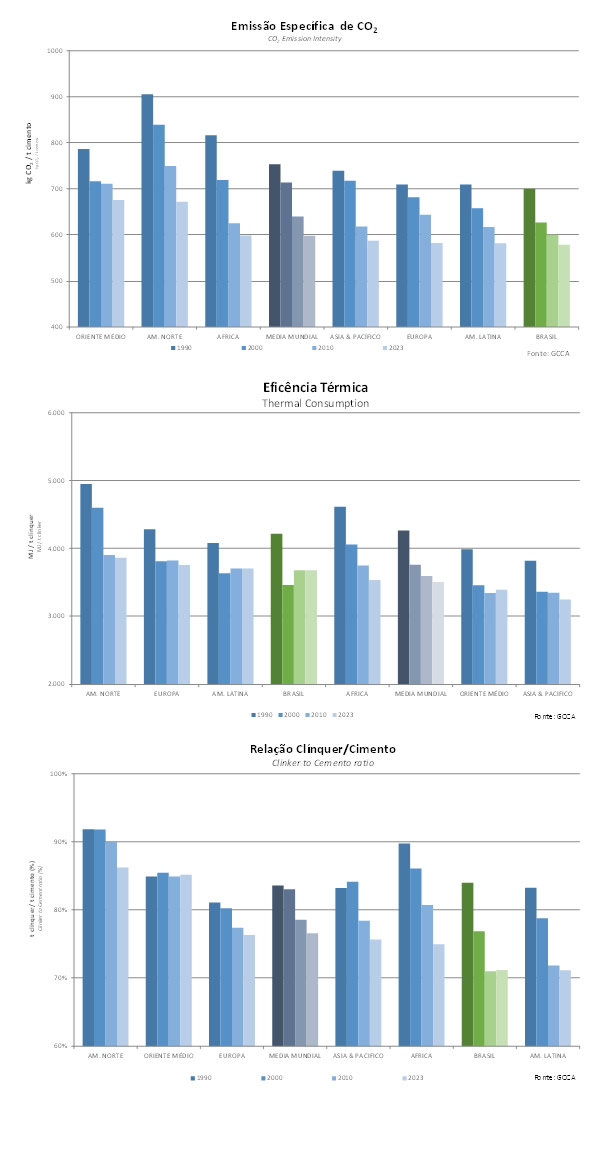
A series of characteristics of the production process and measures adopted by the sector in Brazil have positioned it among the most effective in the control of its emissions, presenting the lowest levels of CO2 per ton of cement produced.
The cement industry in Brazil has a modern industrial park and operates with high levels of energy efficiency when compared to other countries, which results in reduction of fuel burning and, consequently, the release of less CO2.
The cements with additions, made with the use of by-products of other activities and alternative raw materials, have been developed in a pioneering way for more than 50 years in the country, a practice that is being followed today all over the world. Always maintaining the quality of the product and taking into account the specificities of ABNT (Brazilian Association of Technical Norms).
The use of renewable energy is increasingly present in the production of cement. This is possible by the coprocessing of waste (such as tires, waste oils, plastics, paint etc.) and / or the use of biomass (charcoal mill, rice husk, sugarcane bagasse etc.), which emit less CO2 Than traditional fuels used. This process, in addition to providing an environmentally appropriate destination for tailings from other activities, reduces the use of traditional non-renewable fuels, such as petroleum coke, fuel oil and coal.
Such a favorable position with respect to its greenhouse gas emissions, coupled with the expectation of growth in cement consumption in the coming decades, creates a huge challenge for the Brazilian cement industry: meeting the growing demand for cement in the country, for construction Of the infrastructure necessary for its development, maintaining its already low specific emissions of CO2, which places it as one of the most efficient in the world.